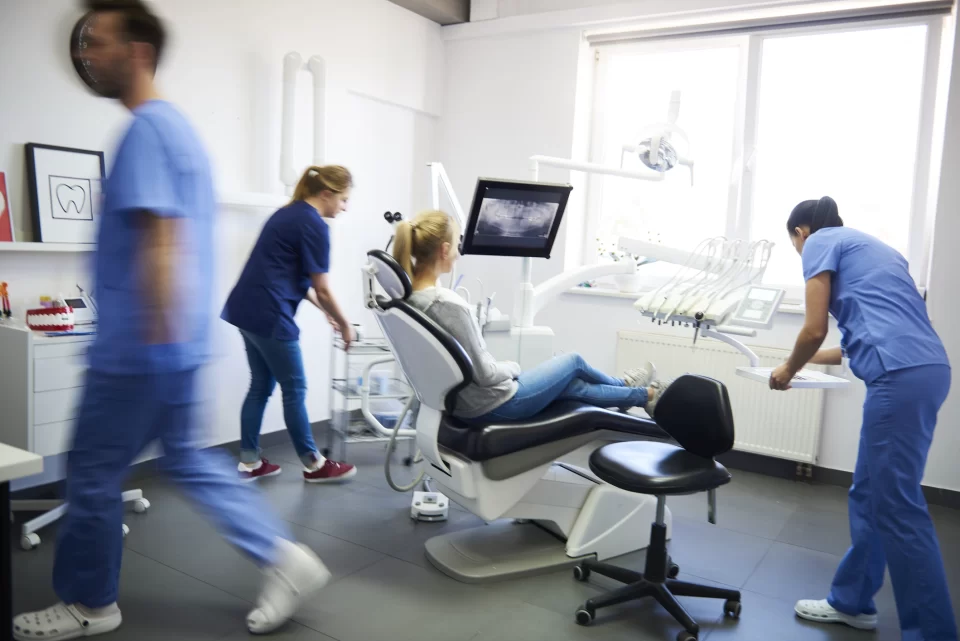
Visiting the dentist might feel routine, but there’s a lot happening in the first few seconds after you walk into the room. Long before you sit down, your dentist is already gathering important information. Your posture, the way you speak, how you breathe, your facial expressions, and even the way you hold your jaw all offer early clues about what might be happening inside your mouth.
Dentists are trained observers, and they can identify patterns that point toward oral health issues before an instrument is ever used. We believe patients deserve to understand the “why” behind their care.
What Dentists Evaluate First When a Patient Enters the Room
The initial impression gives dentists a surprising amount of insight. They start by looking at your overall comfort, your body language, and the way your jaw and facial muscles are positioned. This helps them determine whether you might be experiencing pain, clenching, grinding, or difficulty breathing through your nose.
They also take note of your smile as you speak. Even a quick glimpse can show alignment issues, tooth wear, gum recession, discoloration, or missing teeth. Many early symptoms reveal themselves without needing a mirror or X-ray. These first few seconds help dentists set a mental roadmap of what they might find during the full evaluation.
Dentists also listen closely. The clarity of your speech, the dryness in your voice, or signs of mouth breathing can signal upcoming issues. They’re not judging. They’re gathering information to understand how your oral health fits into the bigger picture.
How Dentists Identify Oral Health Issues Before Starting an Exam
A dentist sees more than just a smile. They see patterns. The human mouth reveals clues about habits, lifestyle, and underlying health conditions. Before the exam begins, dentists look for symmetry in your face, the fullness of your cheeks, and the way your lips rest.
These subtle cues can indicate:
- Chronic clenching or grinding
- Gum inflammation
- Jaw joint tension or imbalance
- Tooth wear from acidic diets or reflux
- Early signs of tooth mobility
- Sleep-related breathing issues
A dentist can often predict what they will find during the exam simply by watching how the jaw moves when you talk. For example, limited movement or shifting may indicate TMJ stress. A collapsed bite or sunken cheeks can signal missing teeth or bone loss. Dry lips or cracked corners may hint at dehydration, vitamin deficiencies, or fungal irritation.
This early assessment allows them to connect the dots between what they see externally and what they expect to find inside the mouth.
What Early Signs of Dental Problems Dentists Notice Right Away
Your dentist pays attention to details most people don’t think about. Early signs of dental problems are often visible long before discomfort appears. These signs may include slight changes in color, subtle inflammation, or unusual wear patterns. Dentists are trained to catch these before they become serious.
Some examples include:
- Redness along the gumline
- Shiny, smooth areas of enamel from grinding
- Small chips that suggest bite imbalance
- Minor swelling under the jaw indicating infection
- Shifts in tooth position suggesting bone loss
- Discoloration that signals decay beneath the surface
- Mouth breathing signals that increase cavity risk
Even the way your breath sounds can be a clue. People with nasal blockage or sleep apnea often breathe heavily through the mouth, drying the teeth and raising the risk of cavities and gum disease.
These are the early indicators that dentists use to guide your care plan. They show what needs attention even before a full cleaning or X-ray is done.
How Dentists Assess a Patient’s Overall Oral Health From Initial Observation
Dentists don’t just look at teeth; they look at the entire system. A quick observation helps them evaluate how well your teeth, gums, jaw, and facial muscles are working together. Harmony in these structures is a strong sign of good oral health. Imbalance hints that something deeper may be going on.
They look at the balance of your bite. They observe breathing patterns that affect oral moisture. They assess gum tone, lip symmetry, and overall comfort. Your dentist can tell whether you may be dealing with stress, inflammation, dehydration, oral infection, or nighttime habits affecting your teeth.
Even your skin, posture, and the way you open your mouth help build this assessment. Many health conditions show oral symptoms early, such as diabetes, vitamin deficiencies, autoimmune issues, acid reflux, and sleep disorders. That’s why dentists always look beyond the mouth.
Experience Dentistry That Sees the Whole You
At Paradise Dental Studio of Fort Lauderdale, we take the time to notice what matters most. Before you sit down, we’re already learning how to help you. Your smile, your comfort, your breathing, and the way your jaw moves all play a role in understanding your oral health. Our team looks beyond routine checkups to give you personalized, thoughtful care that supports long-term wellness.
If you’re ready for a dental experience that focuses on you as a whole person, not just your teeth, we’re here to guide you. Visit us and discover a more attentive, compassionate approach to dentistry.